Platforms
Where people log on, Twin Verify is there.
Windows, Mac and Linux servers. The second factor sits in the same place as the password, so there is nothing new to learn.

Windows
Windows 10/11 and Server 2016+
At the Windows logon screen, on unlock and in Remote Desktop sessions. With network level authentication only the code is asked.


Logon, unlock, Remote Desktop and prompts
The same sign-in tiles at the logon screen, on unlock, in Remote Desktop sessions and in Windows Security prompts such as "Run as" and UAC.
Offline sign-in
Sign-in from an encrypted cache when the network is not there.
Trusted networks
On networks you list, a password alone is enough.
Self-service
First-use wizard, changing Secret Squares, resetting forgotten squares at the logon screen with an emailed code, password change, expiry warnings and forced changes.
Password Protector
Checks passwords against known breaches, as you choose: no check, warn, or require a change. Live check while typing.
Tray app
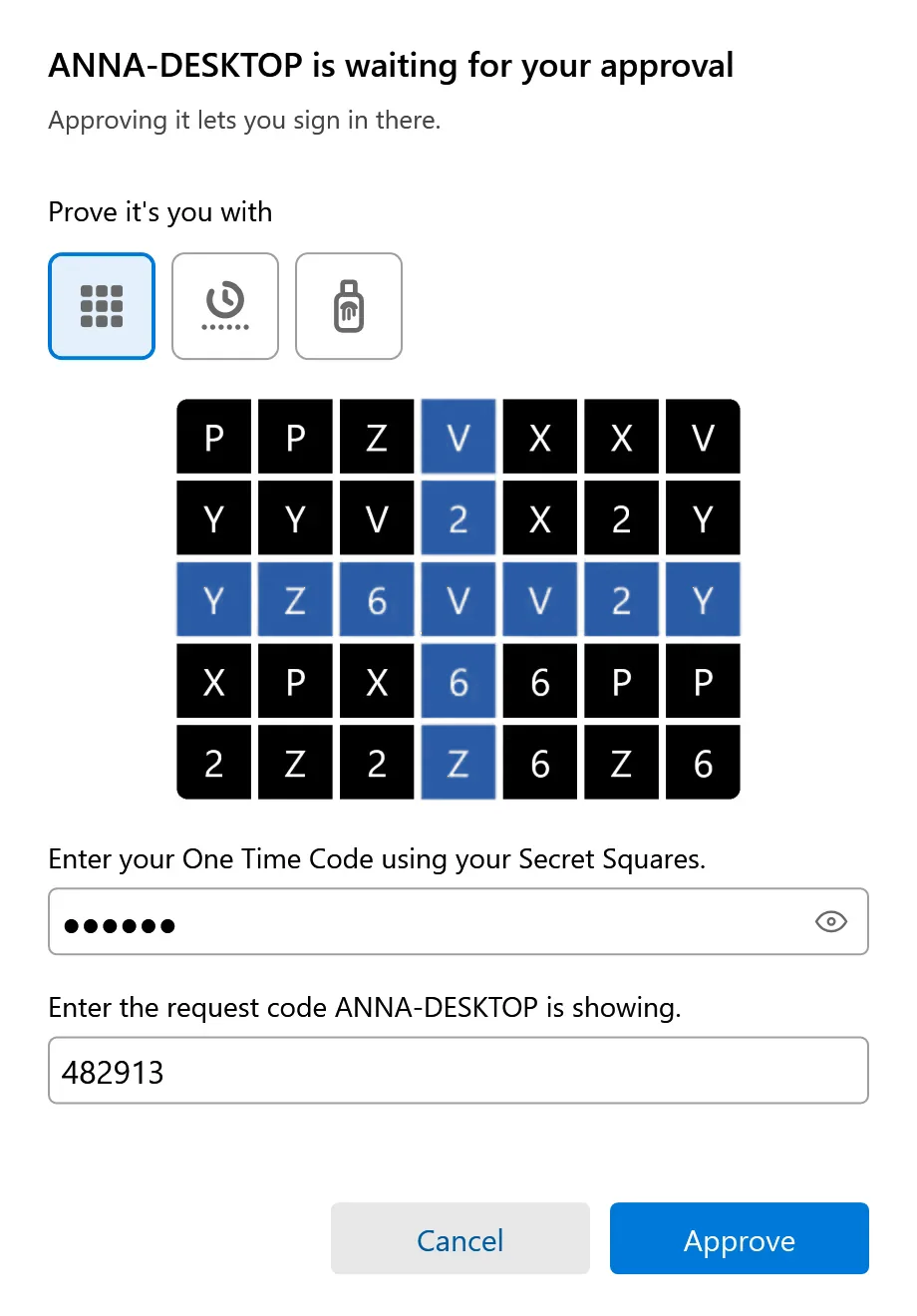
Show grid, change password, change Secret Squares, approve a new computer or browser, generate a password (passphrase, random or PIN) and "Your devices".
Install
MSI installers for x64 and ARM64: one step with an enrolment key, or silent through Intune, group policy or your RMM tool, and enrolment through the MSP agent.
Four languages
English, German, French and Italian.
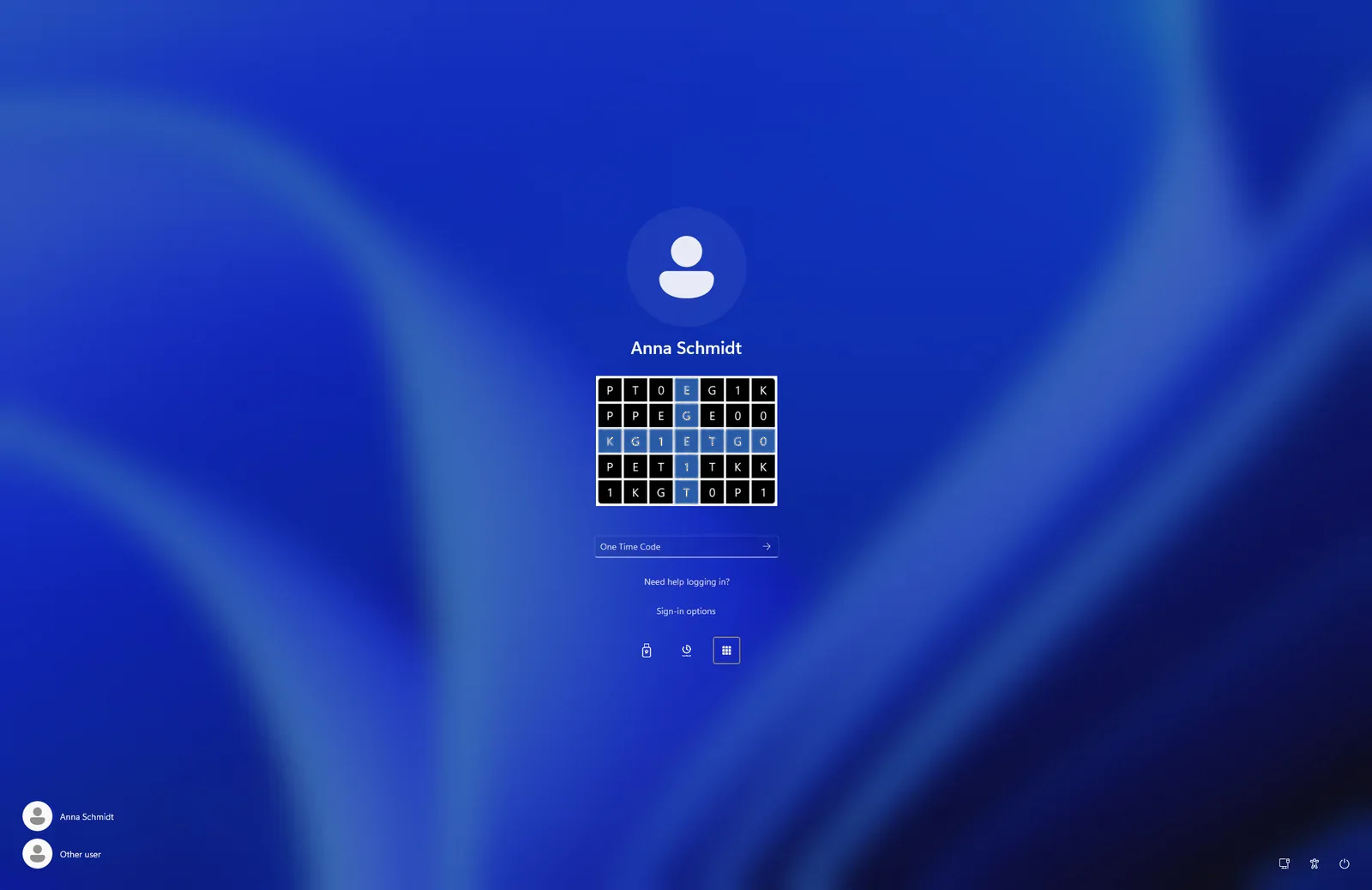
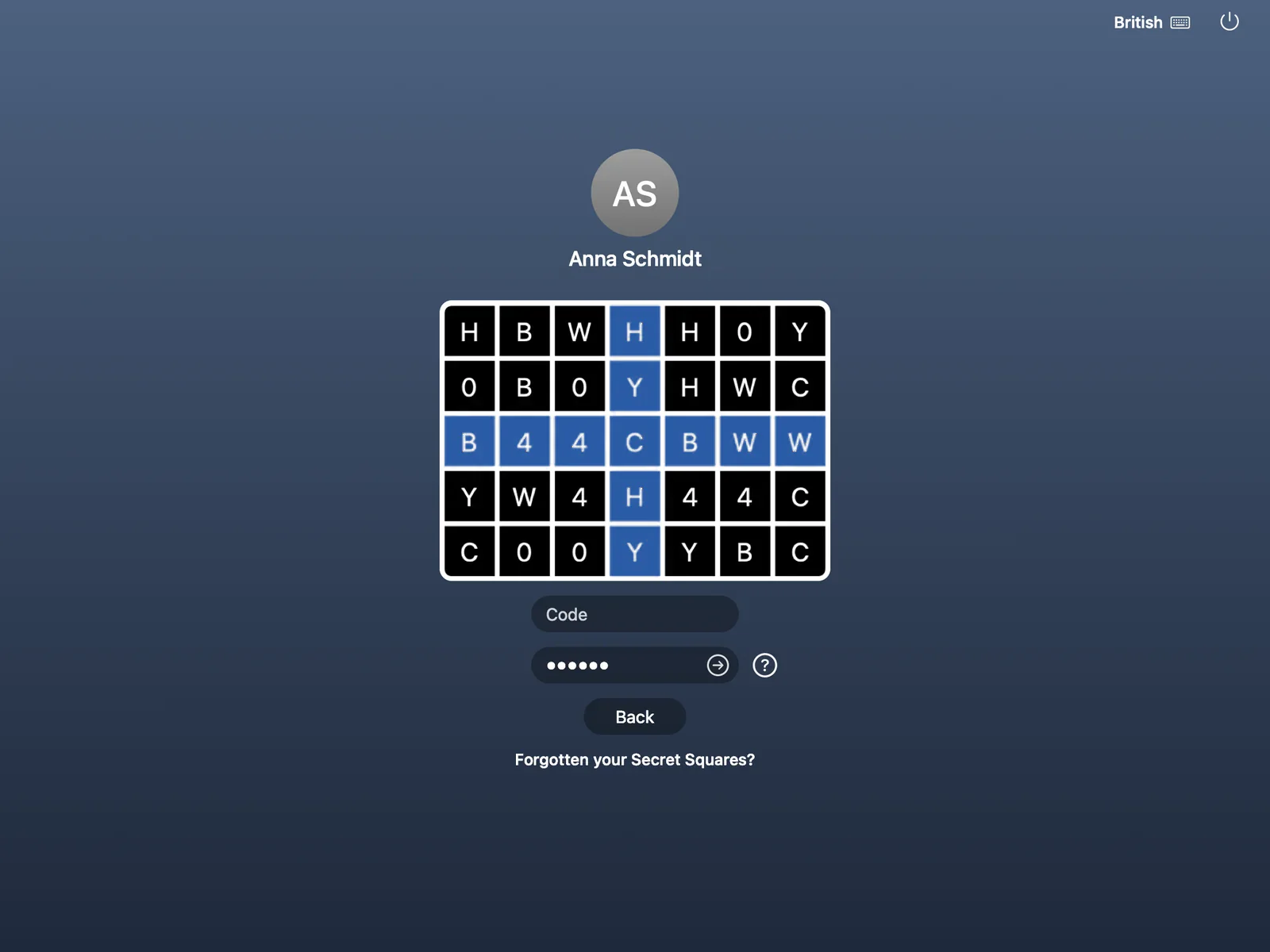
Twin Verify on Windows
The real windows, in the language of your users: the tray menu, the grid, devices, approvals and the password generator.

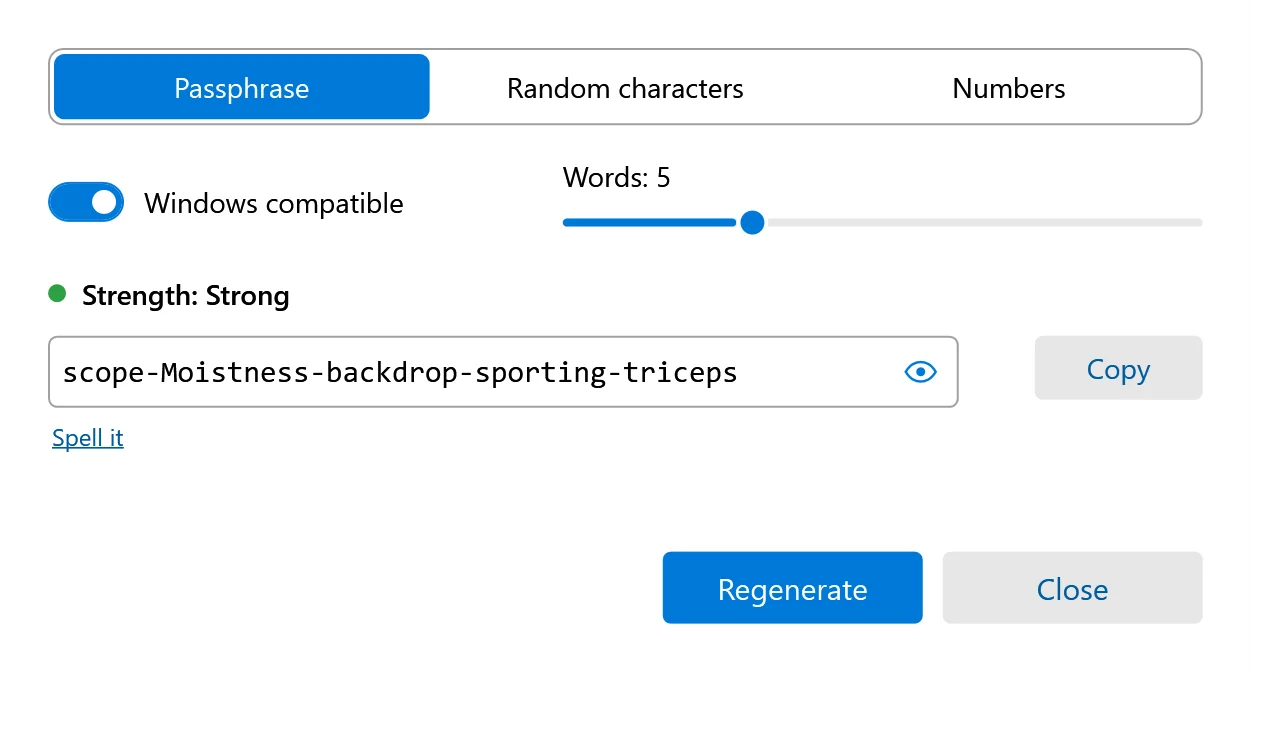
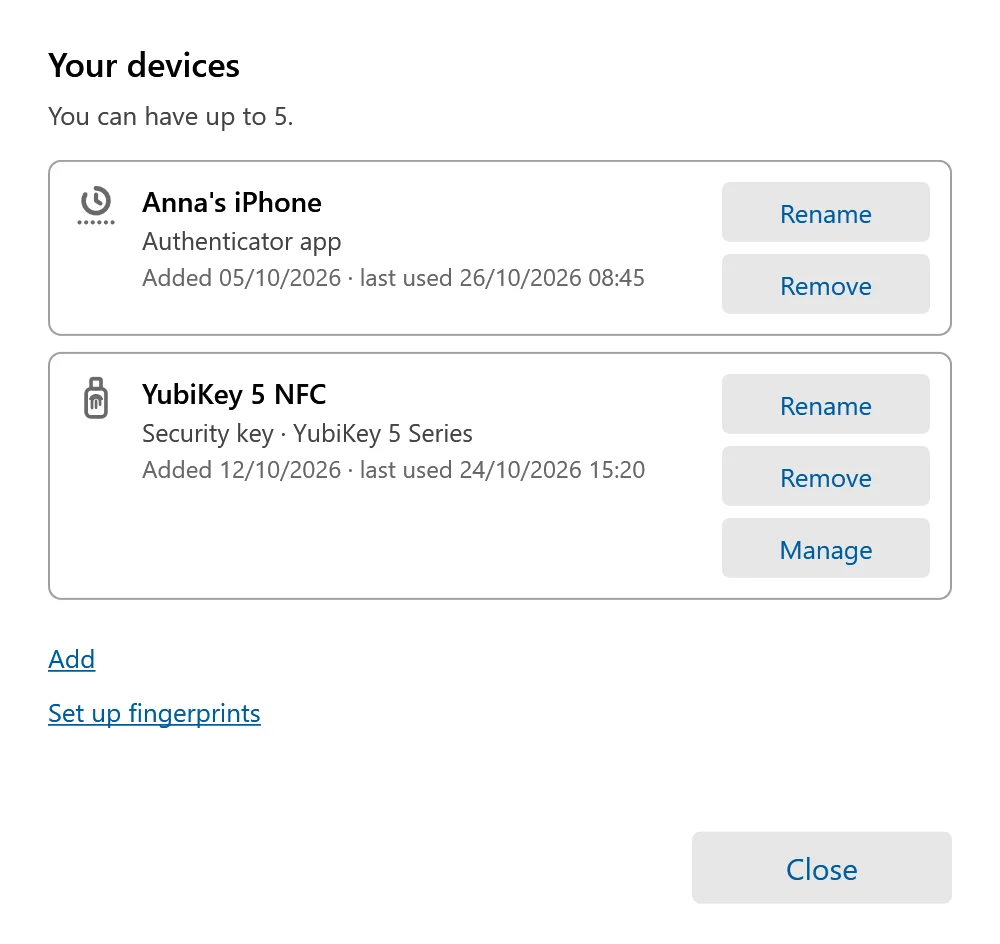


macOS
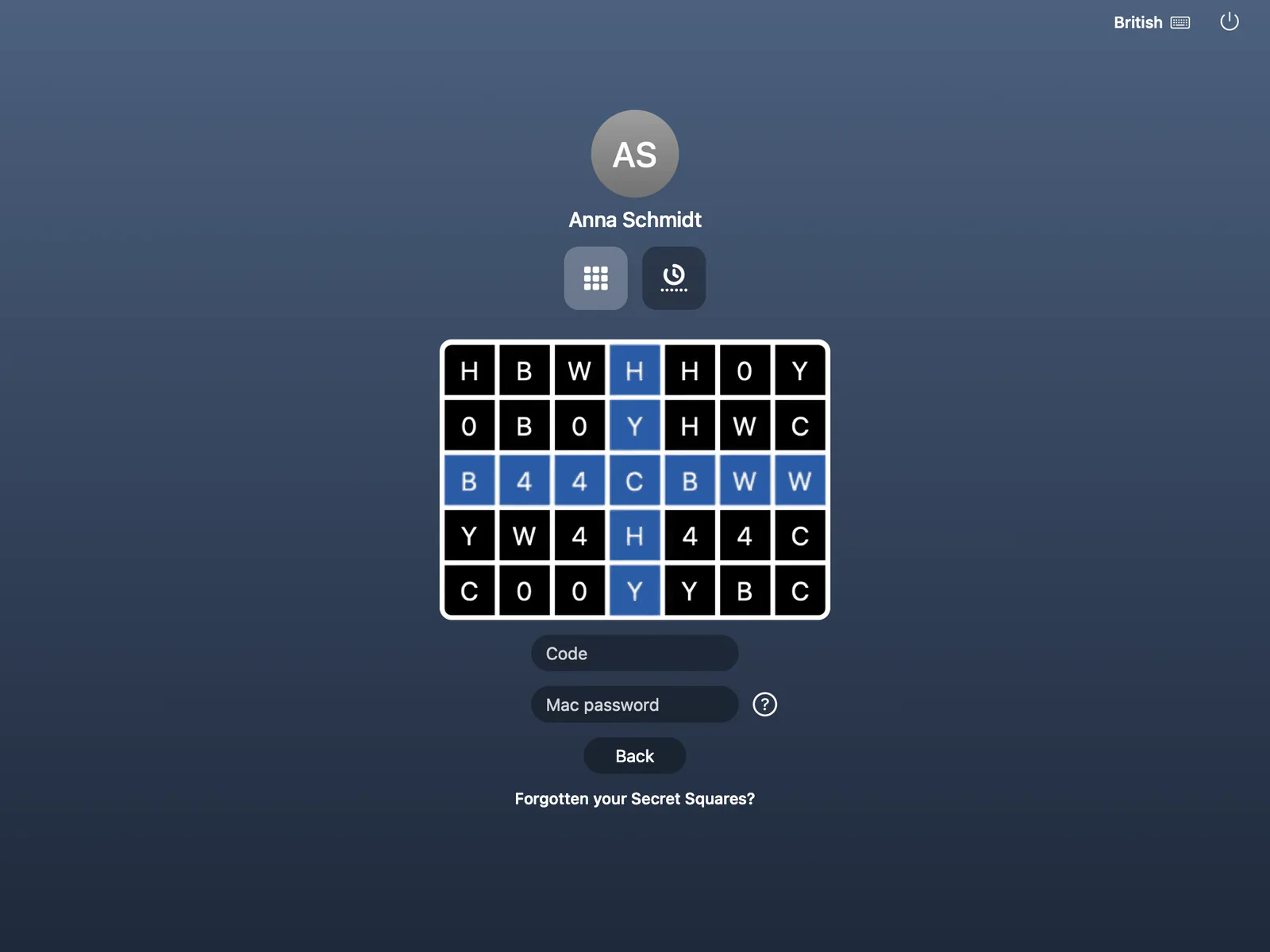
The Mac login window and the menu bar
Twin Verify protects the sign-in at the Mac login window with the same Secret Squares, and brings a menu bar app for everything a user does day to day.
Login window
Secret Squares, authenticator app and security key, passwordless sign-in, access code, offline use and self-linking of the Mac.
Menu bar app
Show grid, change Secret Squares, change password, approve a computer or browser, generate a password.
MDM or not
Configuration profiles for your MDM, or install without MDM.
Four languages
English, German, French and Italian.
Twin Verify on the Mac
The Mac login window and the menu bar app. Your users see them in their own language.

Linux
Linux servers, natively
A native Twin Verify client for Linux servers adds a code to SSH, sudo and su, and to the text console login if you switch that on. It talks to the Twin Verify service over HTTPS, so no RADIUS server is needed.
SSH, sudo and su
A Twin Verify code on top of the SSH key or password the server already asks for: the second step at the prompts admins use every day.
Secret Squares in the terminal
The grid is drawn as text right in the terminal, so it works in any SSH client. Authenticator app codes, a Yubico OTP and help-desk access codes work too.
Two ways for SSH
Key, then code (recommended), or password, then code. You choose per customer in the console.
Works offline
Keeps working when the network is down. Break-glass accounts can be exempt.
Rolled out from the console
One download with the same enrolment key as Windows and Mac, friendly to your RMM. Nothing changes for anyone until one command switches it on: it self-tests first and rolls back on failure.
Supported distributions
Ubuntu 22.04, 24.04 and 26.04, Debian 12 and 13, and RHEL, Rocky Linux and AlmaLinux 9 and 10 (x64, systemd).
At a glance
- Windows 10 and 11, Windows Server 2016 and later
- macOS: login window and menu bar app
- Linux servers: SSH, sudo and su on Ubuntu, Debian, RHEL, Rocky and AlmaLinux
- Languages: English, German, French and Italian on Windows, Mac and Linux servers
Ready for a sign-in people do not work around?
Tell us about your organisation and we will show you how Twin Verify fits. Write to us or call us.